How to Be a Respectful Photographer During New York Fashion Week
I've photographed New York Fashion Week for more than five years and more than ten seasons, and during that time I've photographed just about every part of a fashion show—backstage, runway, fittings, first looks, guest arrivals, and all those little moments happening in between.
And after that many seasons, you start noticing things.
Most of the photographers I've worked alongside have been wonderful professionals. NYFW can be stressful, crowded and incredibly fast-paced, and I've met plenty of photographers who manage to be talented, focused and considerate even when everyone is fighting against the clock.
But I've also witnessed situations that made me think: this really isn't necessary.
Fashion Week is already chaotic enough. We don't need to make it harder for one another.
So, if you're photographing New York Fashion Week for the first time—or simply want to be someone other photographers and production teams actually enjoy working alongside—here are a few things I've learned about being a respectful NYFW photographer.
1. Backstage, Remember That You're an Observer
Backstage is probably my favorite part of New York Fashion Week to photograph, but there is one thing I always try to remember:

The backstage team isn't there for my photograph. I'm there to document their work.
If a makeup artist is applying makeup, don't interrupt them because you want the model to turn toward better light.
If a hairstylist is working, don't ask them to stop because their arm is blocking your photograph.
If someone is making an important last-minute adjustment to a garment, don't interfere because you think you've found the perfect angle.
Yes, we're there to create beautiful photographs. But hair, makeup, styling and production teams are trying to get dozens of things accomplished before the show begins.
Your photograph shouldn't slow down that process.
Move yourself. Change your angle. Wait five seconds. Find another frame.
Sometimes working around what is happening naturally creates a much better photograph anyway.
2. But It's Completely Fine to Ask for a Portrait
Being an observer doesn't mean you can never interact with anyone backstage.
If I see a model whose hair and makeup are finished and she's simply waiting, checking her phone or standing around before the next stage of preparation, I might politely ask:
“Can I take a quick photo of you?”
In my experience, models are usually more than happy to pose.
That gives you an opportunity to create a beautiful portrait without interrupting anyone else's work.
The important distinction is knowing when to ask.
If someone is actively working on the model, let them work. If there is a natural pause, that's completely different.
3. Never Photograph Models While They're Changing
This should probably go without saying.
And yet, after more than ten seasons of Fashion Week, I've unfortunately seen enough situations to know that apparently it still needs to be said.
Do not photograph models while they're changing.
Fittings and backstage areas can become crowded, and models sometimes have to change extremely quickly in spaces where photographers, stylists, designers and production teams are moving around.
Your access to backstage does not mean you have permission to photograph everything happening there.
I've seen photographers get called out—and even asked to leave an area—because they didn't respect this boundary.
There are hundreds of other things to photograph backstage. Put your camera down for those few moments.
4. Don't Get in the Way of Hair, Makeup and Styling Teams
This goes beyond simply not interrupting them.

Backstage can become extremely tight. Makeup artists have kits open. Hairstylists have equipment everywhere. Clothing racks need to move. Production assistants are trying to get people from one place to another.
Be aware of your body, your camera bag and your equipment.
Don't plant yourself in the middle of a working area because you've discovered an amazing angle.
Don't make someone repeatedly ask you to move.
Get your photograph and make room.
One of the most valuable skills you can develop as a backstage photographer is learning how to be everywhere without making yourself the center of everything.
5. Respect the House Photographer
This one is particularly important to me because I've worked as a house photographer during New York Fashion Week myself.
The house photographer is working directly for the designer, brand or production. Their responsibility is to make sure the client receives the photographs they need from the show.
That means they may receive priority positioning.
Please respect that.
I've personally experienced situations as a house photographer that were unnecessarily unpleasant simply because another photographer didn't want to respect positioning or understand why certain access was being prioritized.
There is no reason for it.
If the house photographer needs a particular position to deliver what the designer hired them to create, let them do their job.
You may be trying to create a great portfolio image. They may have a contractual responsibility to document an entire collection.
Those are very different things.
6. Don't Assume an Empty Spot on the Photographer Riser Is Available
The photographer pit or riser can become its own little world before a runway show.
People arrive early because positioning matters enormously. Then photographers may temporarily leave to photograph backstage, first looks or guest arrivals before returning for the runway.
So if you arrive and notice an apparently wonderful empty spot with a backpack or piece of equipment sitting there, don't simply move the bag and take the position.
Ask.
Talk to the photographers around you:
“Is someone shooting from here?”
Chances are, they'll know.
The photographer may be backstage and returning in five minutes.
Even if there isn't a bag there, communicating with the photographers around you before squeezing into a space can prevent unnecessary conflict.
We're all trying to do the same job. A 10-second conversation can make everyone's experience much easier.

7. Be Conscious of Other Photographers' Frames
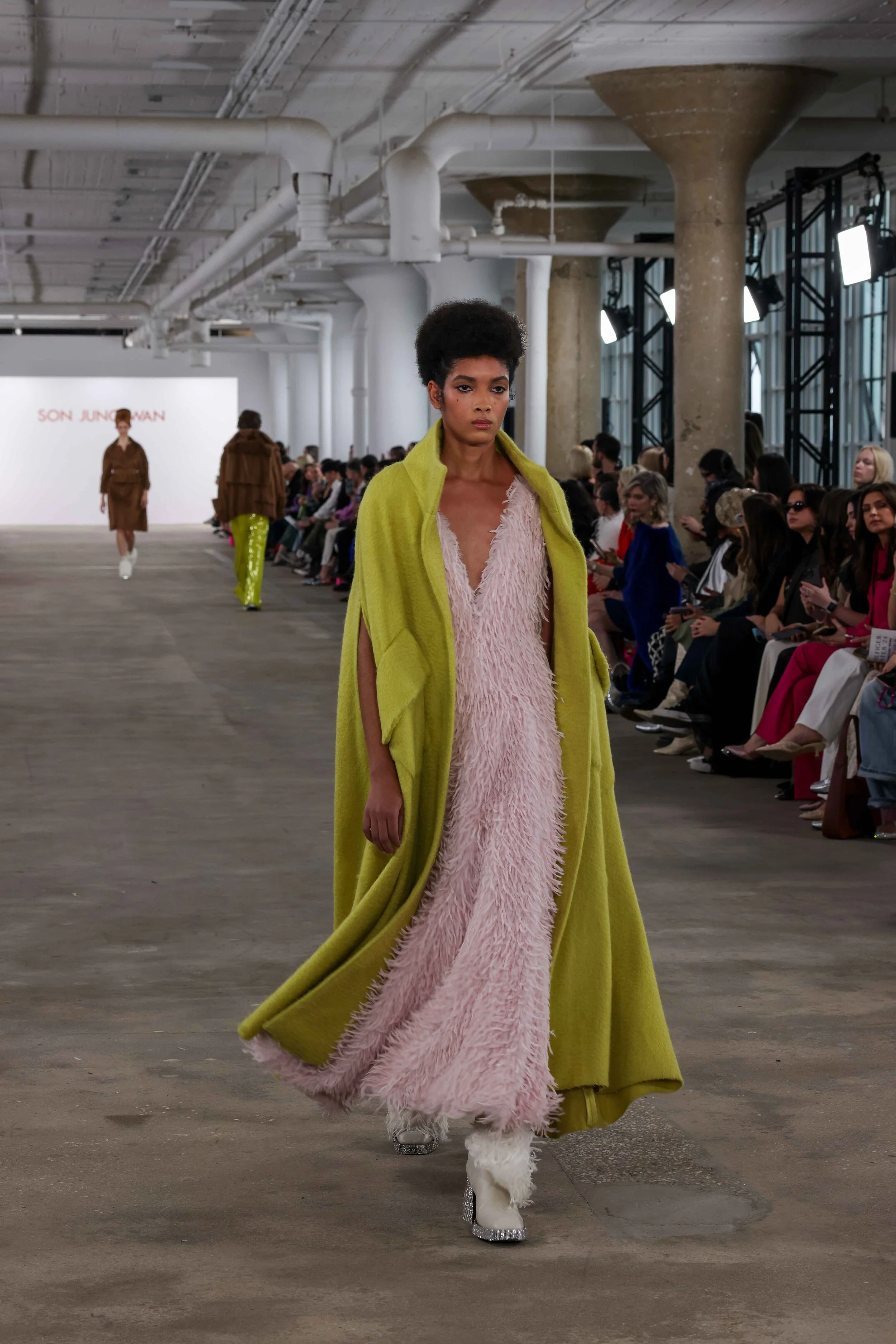
Once the runway begins, everyone has a very limited opportunity to get the shot.
Be aware of the people around you.
Try not to suddenly stand directly in front of someone's lens. Don't repeatedly lean so far into another photographer's shooting space that they can't work. Be conscious of your arms, camera and equipment.
Sometimes movement is unavoidable. Everyone is photographing quickly, changing cameras and adjusting positions.
The point isn't to never accidentally enter someone's frame.
It's simply to have spatial awareness.
The photographer next to you needs their photograph just as much as you need yours.
8. When Photographing Guests, Don't Monopolize Someone
Guest arrivals can be incredibly fun to photograph. Sometimes guests have spectacular outfits, and sometimes you suddenly realize you're standing a few feet away from an A-list celebrity.
It's perfectly fine to ask someone to look toward your camera or pose for a photograph.
But remember that you're probably not the only photographer who wants that shot.
Get your photographs and allow the person to move on—or give other photographers an opportunity.
You don't need to turn a quick arrival photograph into your personal five-minute editorial session while everyone else waits.
9. Listen to Production
Fashion shows operate on extremely tight schedules.
If production tells photographers backstage access is over, it's over.
If security asks you to move, move.
If photographers are being directed toward the riser, go to the riser.
There may be a reason for an instruction that isn't immediately obvious to you.
Arguing with production because you desperately want one more photograph rarely helps anyone—and it can potentially affect whether you're invited back.
Professionalism is part of the job.
10. Don't Create Drama in the Photographer Pit
Photographer pits can be stressful.
People have been waiting for positions. Everyone has expensive equipment. Everyone wants a clean frame. The runway lasts only a few minutes, and if something goes wrong, you don't exactly get to ask the models to walk the collection again.
Tension can happen.
But there's a difference between politely standing up for the space you reserved and turning every small inconvenience into a confrontation.
Communicate.
Ask questions.
Say excuse me.
Say thank you.
If there's a problem, try to solve it rather than immediately escalating it.
And most importantly, remember why everyone is there.
Fashion Week Isn't About the Photographer
This might be the biggest lesson of all.
New York Fashion Week isn't about us.
We're there because a designer created a collection. Models, stylists, makeup artists, hairstylists, producers, PR teams, lighting crews, assistants and countless other people worked incredibly hard to turn that collection into a show.
Our job as photographers is to document it beautifully.
Yes, we want incredible images for our portfolios. We want the perfect runway frame. We want access. We want a great position.
But none of that requires treating another photographer badly, interfering with someone's work or making yourself the center of the room.
After photographing more than ten seasons of New York Fashion Week, I've realized that being a good Fashion Week photographer isn't only about knowing your camera.
You need to work quickly. You need to anticipate moments. You need to adapt constantly.
But you also need to know when to move, when to wait, when to ask, when to put the camera down—and how to respect the hundreds of other people who are working just as hard as you are.
Take the photograph. Get the shot. But be someone people are happy to work with again.
New York Fashion Week Photography
I'm a New York City-based fashion, beauty and editorial photographer with more than five years of experience and more than ten seasons photographing New York Fashion Week.
My NYFW experience includes runway, backstage, first looks, fittings, guest arrivals and full fashion-show coverage.
Explore My New York Fashion Week Photography Portfolio
View My Editorial Photography Portfolio
I'm available for New York Fashion Week photography in NYC, as well as fashion shows, designer presentations and fashion events worldwide.