The Day My Carry-On Weighed 19 Kilos (And I Became That Photographer in a Vest)
I’ve traveled the world as a photographer. I’ve flown to Asia, across the U.S., through Europe — long layovers, short connections, budget airlines, luxury airlines. And never — not once — had anyone weighed my personal item.
Until Vietnam.
I arrived at the international airport ready to fly home with Korean Air, expecting a long 24-hour journey with a layover ahead. My checked bag? Taken without issue.
Then came the surprise.
“Please place your carry-on and backpack on the scale.”
I didn’t even hesitate. I had nothing to hide. I’m a travel photographer — my carry-on always contains my camera bodies, lenses, drone, batteries, laptop, hard drives, chargers. The essentials. The tools of my career.
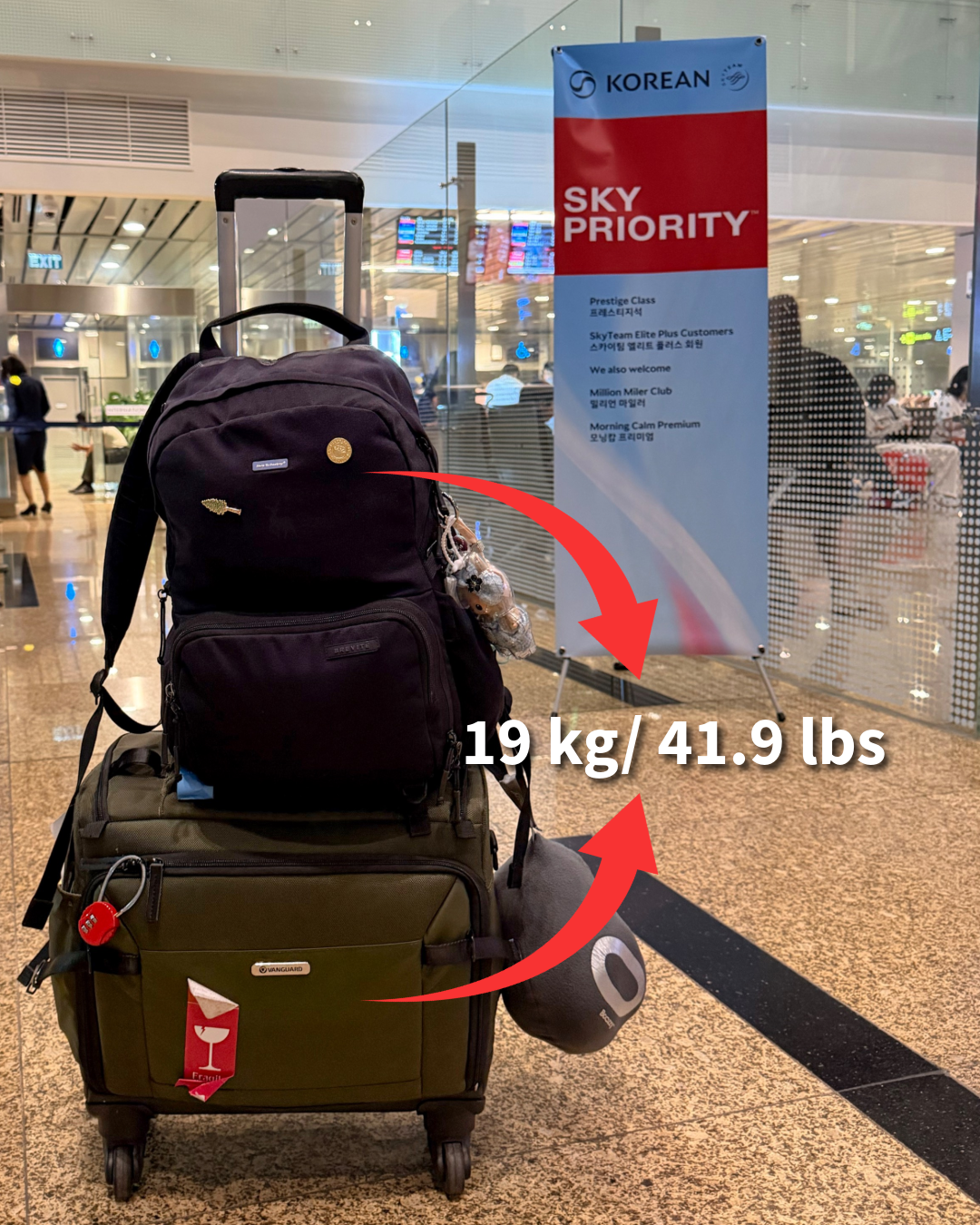
The number appeared on the scale:
19 kilos.
That’s about 41.9 pounds.
And suddenly, everything changed.
“You Have to Check It In.”
The airline staff became firm. Defensive.
“You cannot take this onboard. You must check it.”
Check in… tens of thousands of dollars’ worth of fragile camera equipment?
On a multi-leg, 24-hour international journey?
Absolutely not.
Any photographer reading this understands:
Camera bodies cannot be checked.
Lithium batteries cannot be checked.
Lenses should not be checked.
Drones are risky in checked luggage.
Theft and damage are real concerns.
I calmly explained that nothing inside could safely go into cargo. They made me open everything — my carry-on, my backpack, every zipper, every pouch. They inspected it all.
They saw it was professional gear. Not clothes. Not shoes. Not shopping.
Still — rules are rules.
They called a supervisor.
More inspection. More stress. More waiting.
I remember standing there thinking:
Will I even make it home?
The Stress No One Talks About
Airlines enforce policies differently depending on airport, country, and staff. And apparently, on that day, I was the example.
The flight was overbooked. They said there was no flexibility. I told them if I couldn’t carry it on, I would take another flight. I would not risk checking my equipment.
After what felt like hours (but was probably less), the supervisor finally said:
“We will make an exception for you. But next time, this will not be allowed.”
Relief washed over me — but so did frustration.
Because I travel for work.
I cannot “bring less.”
I cannot shoot with only one lens and hope for the best.
Photography is not minimal when you are delivering for clients.
The Google Search That Changed Everything
While waiting for security, still shaken, I started researching solutions.
Because I knew one thing:
This will happen again.
And that’s when I discovered what many photographers already know:
The photographer vest strategy.
Or what I now call:
The Onion Method — Photography Edition.
You’ve seen those travelers at the airport wearing five sweaters, two jackets, and three hats because their suitcase is overweight. I used to secretly laugh and think, I would never.
Well.
Here I am.
But instead of sweaters, it’s lenses.
Instead of scarves, it’s batteries.
Instead of layering fashion — it’s survival.
The Vest Has Arrived
The moment I landed in New York, I ordered a professional photographer’s vest — the kind with endless pockets.
I tried it on.
And let me be honest.
Every time you see me wearing it at the airport, just know:
I am internally screaming.
It is not chic.
It is not flattering.
It does not align with my aesthetic.
I look like I joined a fishing expedition instead of boarding an international flight.
But it works.
Because here’s the loophole:
Items worn on your body are not considered carry-on weight.
So now, if necessary:
Lenses go in pockets.
Batteries go in pockets.
Hard drives go in pockets.
Even smaller camera bodies can go in pockets.
Is it glamorous?
No.
Is it strategic?
Absolutely.
What This Taught Me About Traveling as a Photographer
Never assume airline leniency.
Policies are enforced differently at international airports.
Overbooked flights mean stricter enforcement.
Always have a backup plan.
Protecting your equipment is protecting your livelihood.
Travel photography looks beautiful on Instagram.
But behind the scenes?
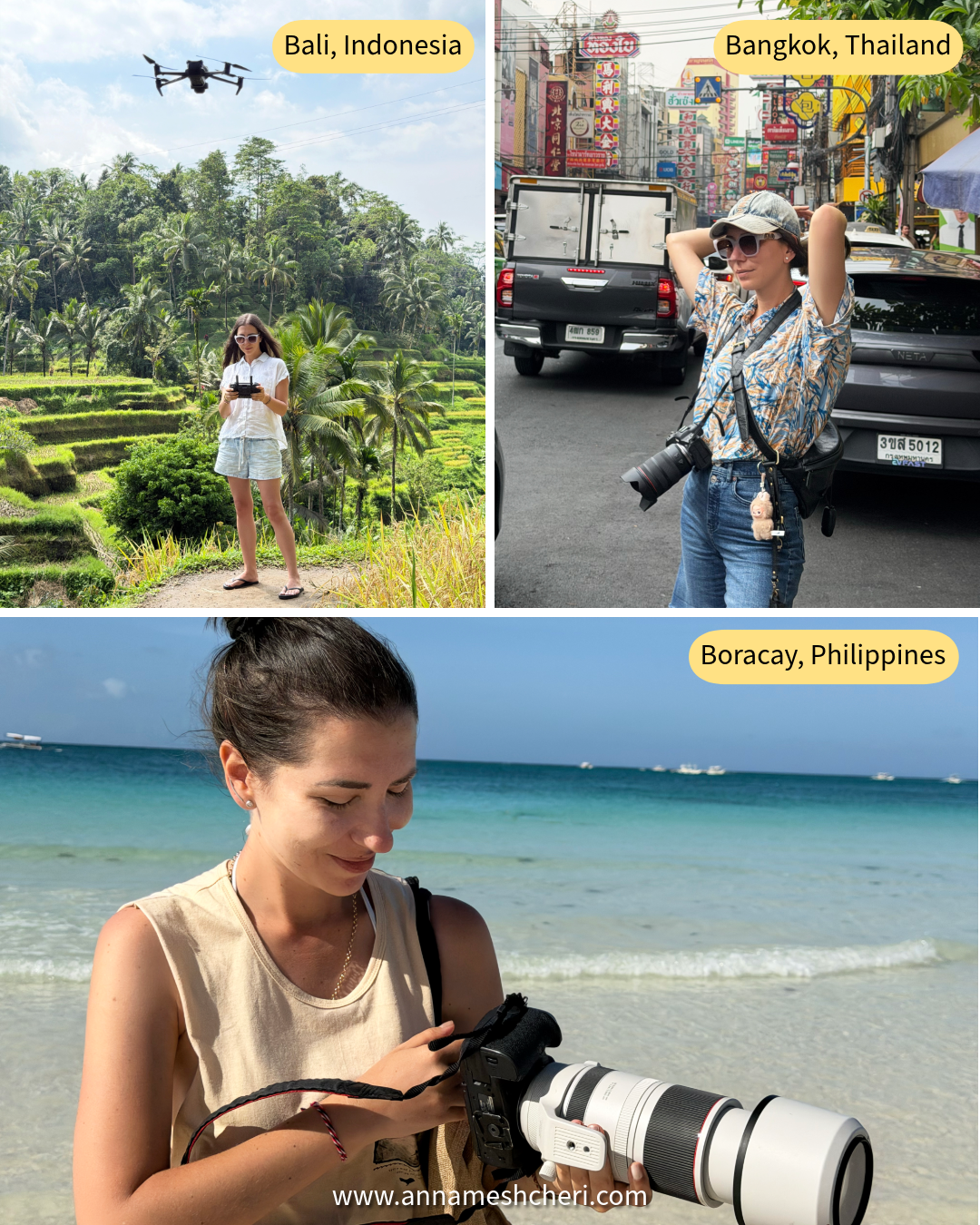
It’s logistics. Strategy. Risk management.
It’s negotiating at check-in counters.
It’s knowing airline rules better than the staff sometimes.
It’s adapting.
Will I Stop Traveling?
Absolutely not.
I am a New York–based travel photographer.
My work takes me across continents.
And I refuse to let a baggage scale stop my career.
If wearing a slightly embarrassing vest is the cost of protecting my equipment — I’ll wear it.
With dignity.
(Okay… maybe with mild humiliation.)
But I’ll wear it.
Because the world is too big.
The stories are too important.
And the images are waiting.